By Bhoyyie Jalloh Jamboria
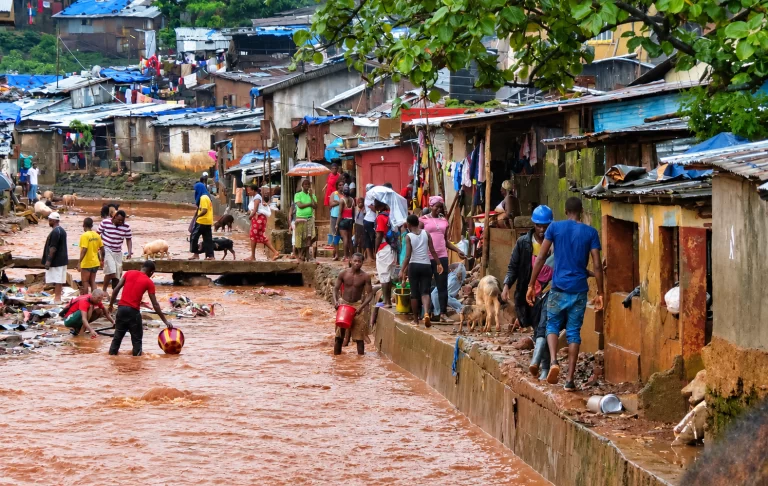
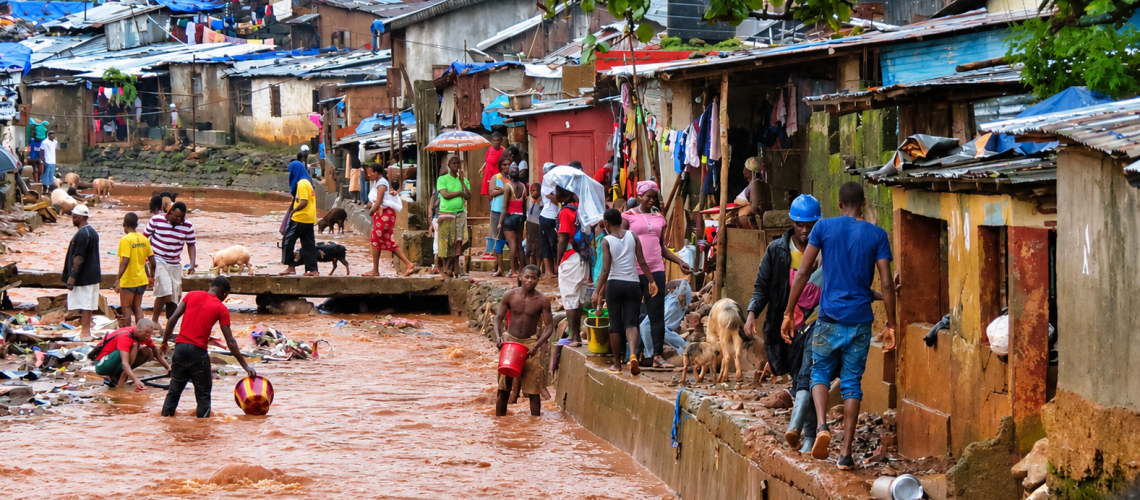
In the early hours of 31 August 2025, almost exactly a year ago, the sky over Sierra Leone did not simply rain; it emptied itself. Torrential downpours pounded the country for hours, overwhelming drainage systems and swelling rivers until they burst their banks across seventeen communities in seven districts.
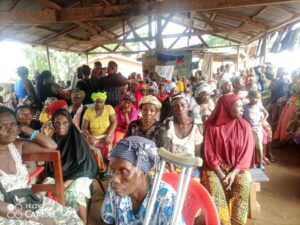
By the time the waters receded, more than 11,080 people, that’s about 2,216 households, had been swept into crisis. Over 4,000 of them were displaced entirely, taking shelter in schools, public buildings, and the homes of relatives who often had little more to offer than their own roofs.
According to the International Federation of Red Cross and Red Crescent Societies (IFRC), which released its final situation report on the disaster in September 2026, the flooding “exceeded the capacity of drainage systems and natural waterways, resulting in rapid water accumulation, river overflows, and extensive flooding in affected communities.”
It is a familiar, almost weary sentence in the annals of West African disaster reporting. It is one that echoes similar warnings issued by the UN Office for the Coordination of Humanitarian Affairs (OCHA) after Sierra Leone’s catastrophic 2017 mudslides. And by Mozambique’s disaster management agency following Cyclone Idai in 2019. Both of these references cited the same lethal combination of unplanned urban drainage and climate-intensified rainfall now battering the region with growing regularity.
What makes the Sierra Leone Red Cross Society’s (SLRCS) response noteworthy is not merely its speed, but its texture. We are talking about the granular, almost intimate detail of what recovery actually looks like on the ground.
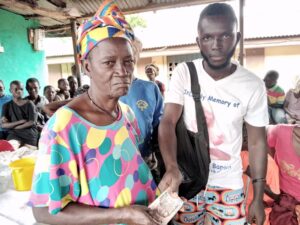
Funded through a CHF 375,000 (US$465,436.33) allocation from the IFRC’s Disaster Response Emergency Fund (DREF), the five-month operation reached 5,870 people. It delivered two rounds of multipurpose cash assistance to 1,000 households and rebuilt 241 houses, with nine more nearing completion by the close of the intervention.
The report notes that families used the cash “to meet their immediate food and nutritional needs and replace essential household items lost or damaged during the floods, including bed sheets, drinking buckets, laundry bowls, cooking utensils, cups, sleeping mats, and blankets”. That inventory was so mundane that it became devastating, a reminder that disaster strips away not grand possessions but the small, unremarkable tools of daily dignity.
This mirrors findings from similar cash-based interventions documented by the World Food Programme in Malawi after Cyclone Freddy in 2023, where researchers found that unconditional cash transfers, rather than in-kind aid, allowed displaced families to prioritize their most urgent needs. This is a model increasingly favored by humanitarian agencies worldwide precisely because, as the IFRC itself has argued in prior DREF operations across the Sahel, “cash assistance restores choice and dignity to people who have lost almost everything else.”
Yet for all its success, the report closes on a note of unfinished business that will feel painfully familiar to anyone who has followed climate disaster recovery from Pakistan’s 2022 floods to the Horn of Africa’s recurring droughts: the emergency phase ends long before the human cost does.
More than 2,500 hectares of farmland remain inundated or ruined, an agricultural wound in a country where farming is, for most rural households, both livelihood and lifeline.
“Residual needs remained at the close of the operation,” the report states bluntly, “particularly among households affected by the loss of crops, agricultural inputs, and other livelihood assets. Many families continued to face challenges restoring their income sources and recovering from the economic impacts of the floods.”
It is a warning humanitarian agencies have sounded before and will sound again. That disaster response, however well-funded and well-executed, is only the first act.
The Sierra Leone Red Cross’s own conclusion is that “continued investment in livelihood recovery, agricultural restoration, resilience building, and disaster preparedness will be important to support sustainable recovery”.
This reads less like a closing statement than an open appeal, one more entry in a growing global ledger of climate-vulnerable nations asking the world not just to respond to the next flood, but to help them survive the one still unfolding beneath the surface.